Thursday, February 26, 2026Vol. IV · No. 12

SYNAPSE

The Journal of Neural CuriositySubscribe Free →
Lead Essay — Cognitive Neuroscience

Your Brain Deletes

Memories on Purpose —

Here's Why.

afferentinterneuronefferent→ synaptic cleft

Fig. I — Simplified schematic of synaptic transmission, after Cajal (1909)

Synaptic pruning isn't failure — it's the brain's most elegant editorial decision. New research from MIT reveals the molecular machinery that chooses which memories stay and which dissolve, and what it means for who we become.

Psychopharmacology

The Placebo Mechanism Is Not What You Think It Is

Three decades of controlled trials point to a single uncomfortable conclusion: belief is biochemistry.

9 min read · Dr. Priya Nair
Neuroplasticity

London Cab Drivers and the Hippocampus That Grew

Maguire's landmark study revisited — what 20 years of follow-up data tells us about lifelong plasticity.

11 min read · James Okonkwo

This Edition

"The brain is not a hard drive. It is a novelist — rewriting the past to make sense of the present."

Send Me the Next Edition
Memory ReconsolidationPredictive ProcessingGlymphatic ClearanceSynaptic PruningNeural PlasticityDefault Mode NetworkInteroceptionConnectomicsPsychedelic NeuroscienceSleep Architecture
01 / Manifesto

Neuroscience is the most important story of our time.

It is also, almost universally, badly told.

The journals are paywalled. The press releases are breathless. The pop-science books simplify until nothing true remains. Meanwhile, the actual science — messy, provisional, astonishing — sits untranslated for the people who most need it: curious minds without a PhD, trying to understand why they feel what they feel, remember what they remember, and are who they are.

Synapse exists to close that gap.

We write long. We cite primary sources. We assume you are intelligent. We refuse to reduce a 40-page paper to three bullet points, because the nuance is the point. Every essay here is a small act of resistance against the dopamine economy — a bet that you came here to think, not to scroll.

The brain made you curious. We give that curiosity somewhere to go.


The Editors, Synapse Journal · February 2026
02 / Featured Essays

Memory & IdentityFeature
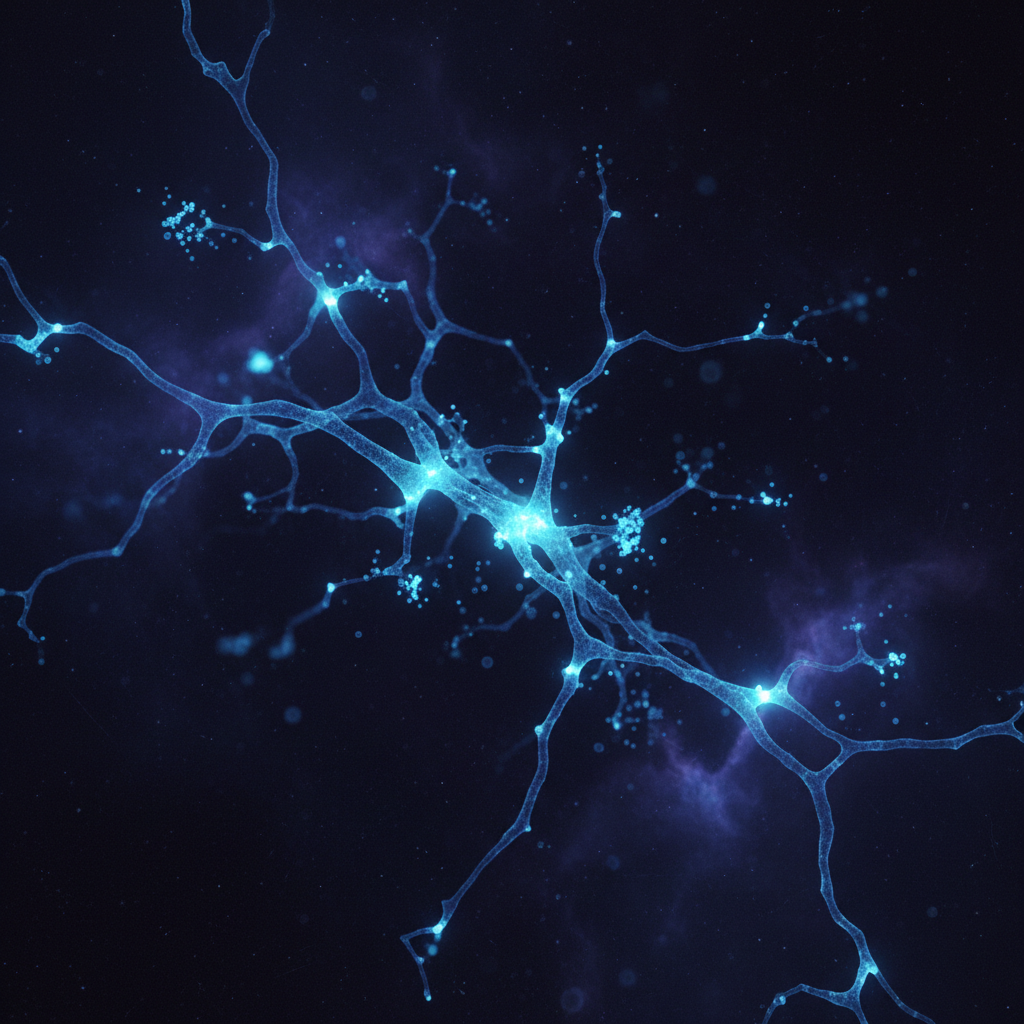
Abstract visualization of neural pathways glowing in blue against dark background representing memory reconsolidation

The Reconsolidation Window: Every Time You Remember, You Rewrite

Memory isn't retrieval — it's reconstruction. Each act of remembering opens a brief, terrifying window in which the past becomes editable. A close reading of Nader, Schafe & LeDoux's 2000 paper that rewrote the textbooks.

"The past is not a fixed archive. It is a living document, revised by every reading."

Dr. Amara Osei18 min read
Read Essay →
Consciousness StudiesDeep Dive
Close-up portrait of a person with eyes closed in contemplation, soft studio lighting on face

What the Global Workspace Theory Gets Wrong About You

Baars' theatre of consciousness has dominated cognitive science for 40 years. Predictive processing theory is staging a quiet coup — and the stakes are higher than academic turf wars.

"Consciousness may not be a spotlight. It may be the stage itself — and everything on it."

Marcus Lindqvist22 min read
Read Essay →
Sleep ScienceResearch Dispatch
Person sleeping peacefully in dim light representing the glymphatic system active during sleep

The Glymphatic System and the Debt You Run Up Every Night You Don't Sleep

Discovered only in 2013, the brain's waste-clearance system runs almost exclusively during sleep. Maiken Nedergaard's research explains why chronic sleep deprivation is not a productivity strategy — it's a slow demolition.

"The brain washes itself while you dream. Miss enough nights, and the bill comes due in ways medicine is only beginning to count."

Dr. Yuki Tanaka16 min read
Read Essay →

03 / Interstitial

If your memories are

rewritten every time

you recall them —

who is remembering?

Continue Reading
Keep Going →
04 / Subscribe

Send Me the
Next Edition.

Three complete essays, free, before we ever ask for anything. Then one edition per week — or every new essay as it publishes. No noise. No listicles. Just the work.

Free Download

"The 12 Neuroscience Papers That Changed Everything"

A curated PDF guide — annotated, with plain-English summaries of each paper's core finding. Included free with your subscription.

or

No spam. No third-party sharing. Unsubscribe in one click.

Enjoying the read? The next essay lands Monday morning.